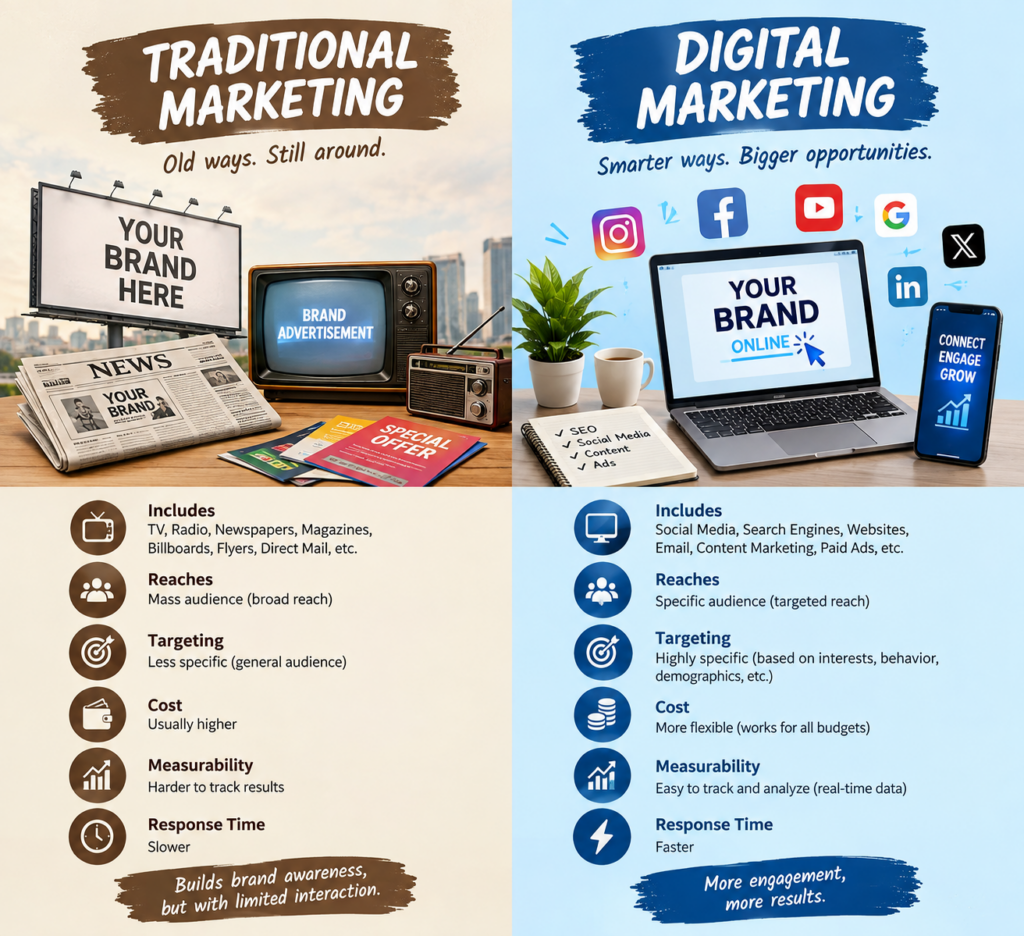

One of the most important parts of digital marketing is knowing who you are trying to reach.
You may have a great product or service, but if your marketing is reaching the wrong people, it can be difficult to get good results. This is why identifying your target audience is important.
Your target audience is the group of people who are most likely to be interested in what your business offers.
But how do you find the right audience for your business? Let’s look at some simple steps.
WHAT IS A TARGET AUDIENCE
A target audience is a specific group of people who are most likely to need or buy your product or service.
For example, imagine you run an online clothing store that sells trendy clothes for college students.
Your target audience might be:
- Age: 18–25
- Students and young adults
- Interested in fashion
- Active on Instagram
- Looking for affordable and trendy clothing
Instead of trying to reach everyone, you can focus your marketing on people who are more likely to become your customers.
1. UNDERSTAND YOUR PRODUCT OR SERVICE
The first step is to understand what you are offering.
Ask yourself:
- What problem does my product or service solve?
- Who needs it?
- What benefits does it provide?
- Why would someone choose my business?
For example, if you provide digital marketing services, your potential audience could include small businesses, startups, local shops, or business owners who want to improve their online presence
2. RESEARCH YOUR POTENTIONAL CUSTOMERS
Once you understand your product, start learning about the people who may need it.
You can look at factors such as:
- Age
- Location
- Gender
- Occupation
- Interests
- Income level
- Buying behaviour
- Online activities
- Common problems and needs
This information can help you understand what your audience wants and how you can communicate with them.
3.FIND OUT WHERE YOUR AUDIENCE SPENDS TIME ONLINE
Different audiences use different platforms. For example, younger audiences may spend more time watching short-form videos on platforms like Instagram and YouTube. Professionals may be more active on LinkedIn.
This doesn’t mean you have to use only one platform. Instead, understand where your potential customers are most active and focus your efforts there.
4.STUDY YOUR COMPETITORS
Your competitors can also give you useful information.
Look at businesses that offer similar products or services and observe:
- Who follows them?
- What type of content do they post?
- Which posts receive more engagement?
- What questions do people ask in the comments?
- What problems are they trying to solve?
You don’t need to copy your competitors. Use their strategies as a source of information and look for ways to create something more useful and relevant to your audience.
5.USE SOCIAL MEDIA INSIGHTS
Social media platforms can provide useful information about your existing audience.
You can check things like:
- Age groups
- Locations
- Engagement
- Content performance
- Audience interests
This information can help you understand what type of people are already interacting with your content.
If a particular type of content consistently gets more engagement, it may give you clues about what your audience finds useful or interesting.
6. LISTEN YOUR AUDIENCE
Sometimes the best way to understand your audience is simply to listen to them.
Pay attention to:
- Comments
- Reviews
- Messages
- Questions
- Customer feedback
These can reveal what your customers actually care about.
For example, if people repeatedly ask the same question about your service, that question could become a useful social media post or blog topic.
A SIMPLE REAL LIFE EXAMPLE
Imagine you own a small bakery.
Instead of simply posting, we sell cakes,” you could identify your audience more specifically.
Your target audience might include:
- Young adults
- Parents
- People planning birthdays
- People looking for customised cakes
- Customers living near your bakery
Now you can create content specifically for them, such as birthday cake ideas, customised cake designs, special offers, and celebration ideas.
This makes your marketing more relevant to the people who are most likely to become customers
CONCLUSION
Finding the right target audience is not about trying to reach everyone.
It is about understanding who needs your product or service, what they are looking for, and where you can reach them.
Start by understanding your product, researching potential customers, studying competitors, creating a customer persona, and using real audience data.
The better you understand your audience, the easier it becomes to create content and marketing campaigns that connect with the right people.